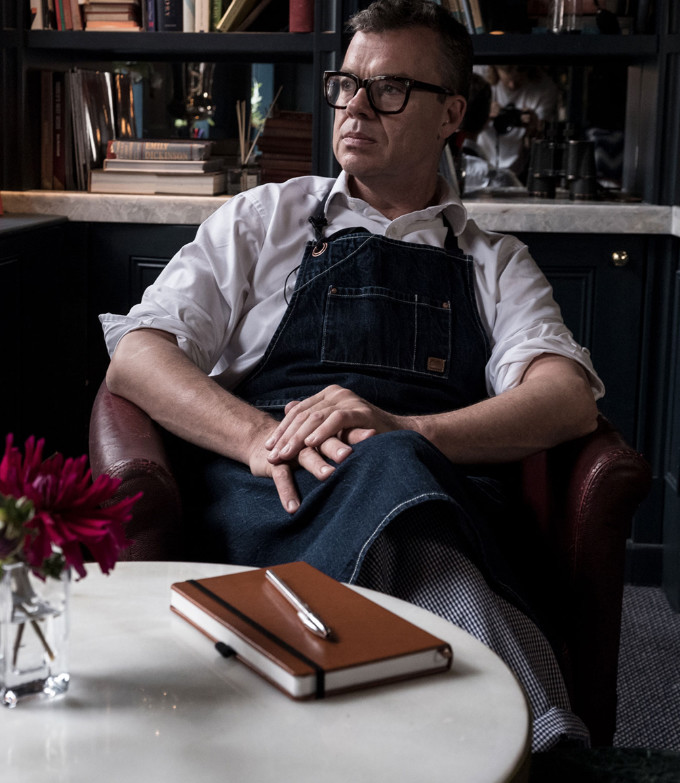


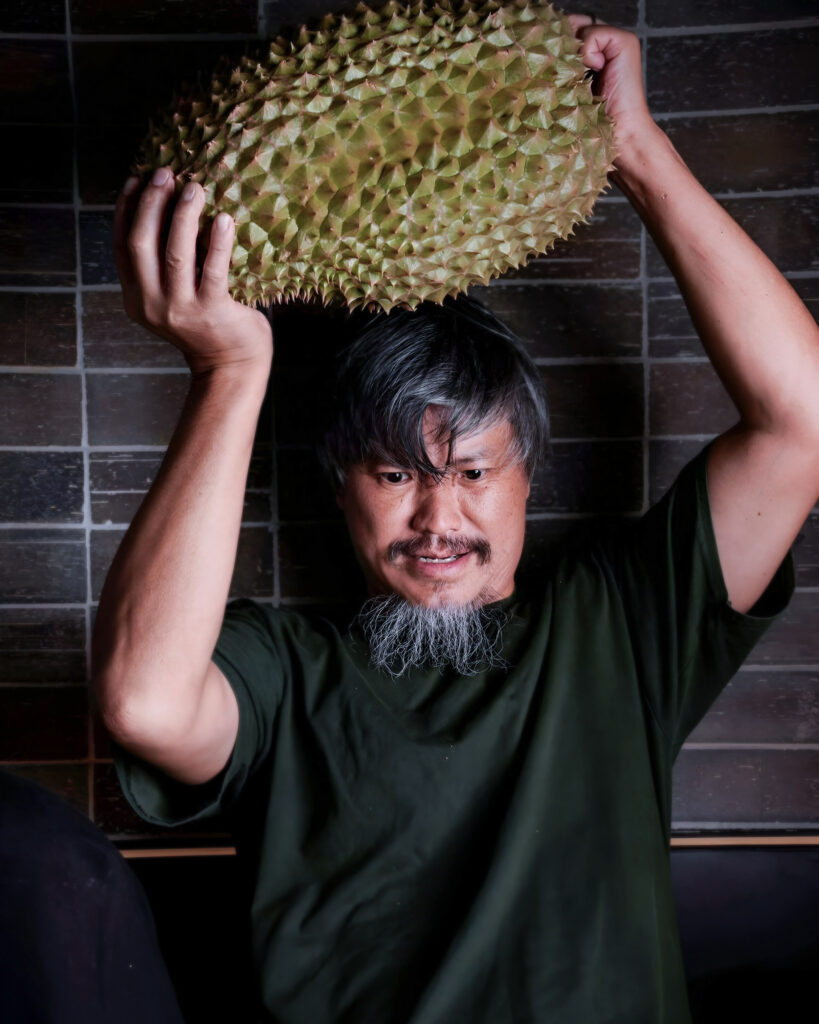
In the village, we flew kites made from newspaper and bamboo and ate meals around the fire together in the evening. We call it Hing Fai. (Note: ‘หิงไฟ’ in Northern Thai dialect means “warming by the fire”.) My way of life during childhood was like a recipe for ideas – an experience that I pass on to the juniors. I was just a commoner, but I was happy.
My name means “philosopher”. My dad is from Sri Saket. My mum is from Lampang, where I was born and raised among fields and rice paddies. I was born into a big family. My grandfather adopted orphans and delinquents from the neighbourhood. We raised chickens, pigs, water buffaloes, and cows; grew rice and longans.
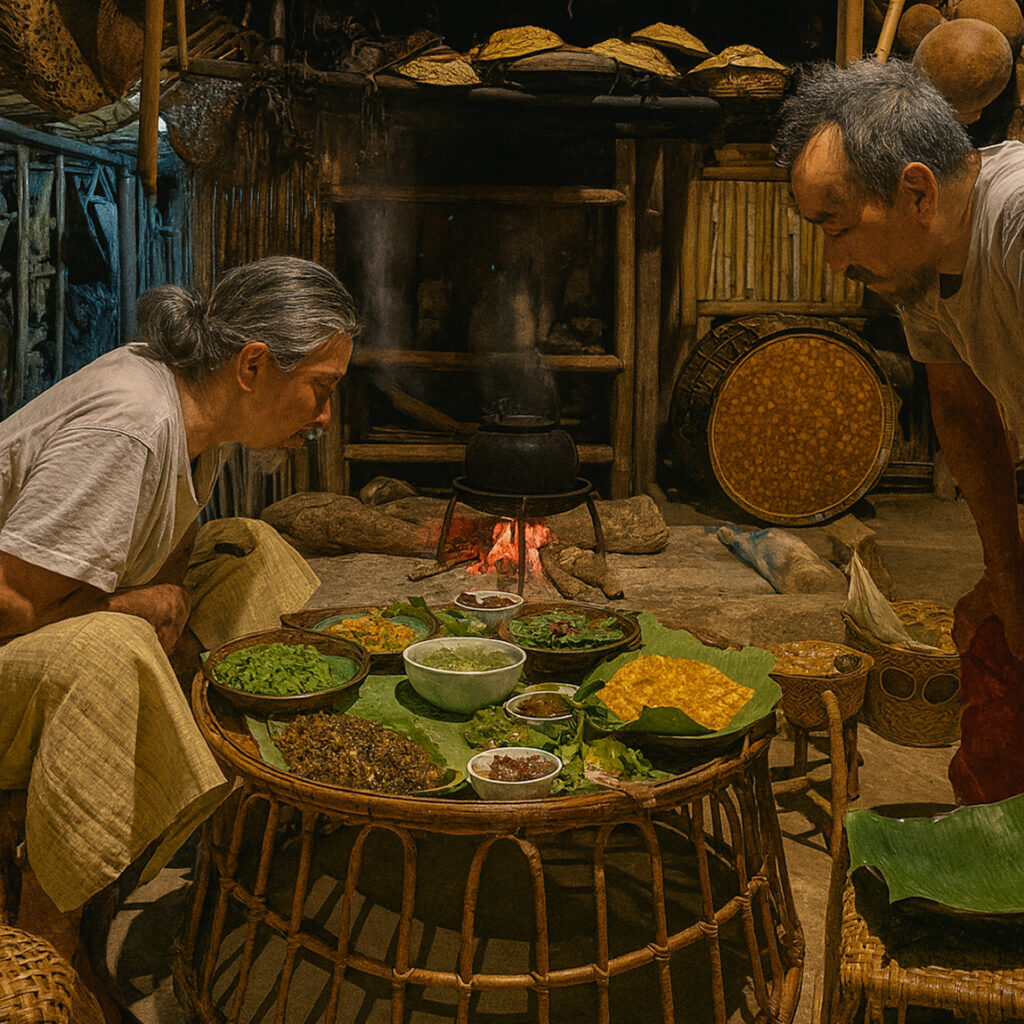
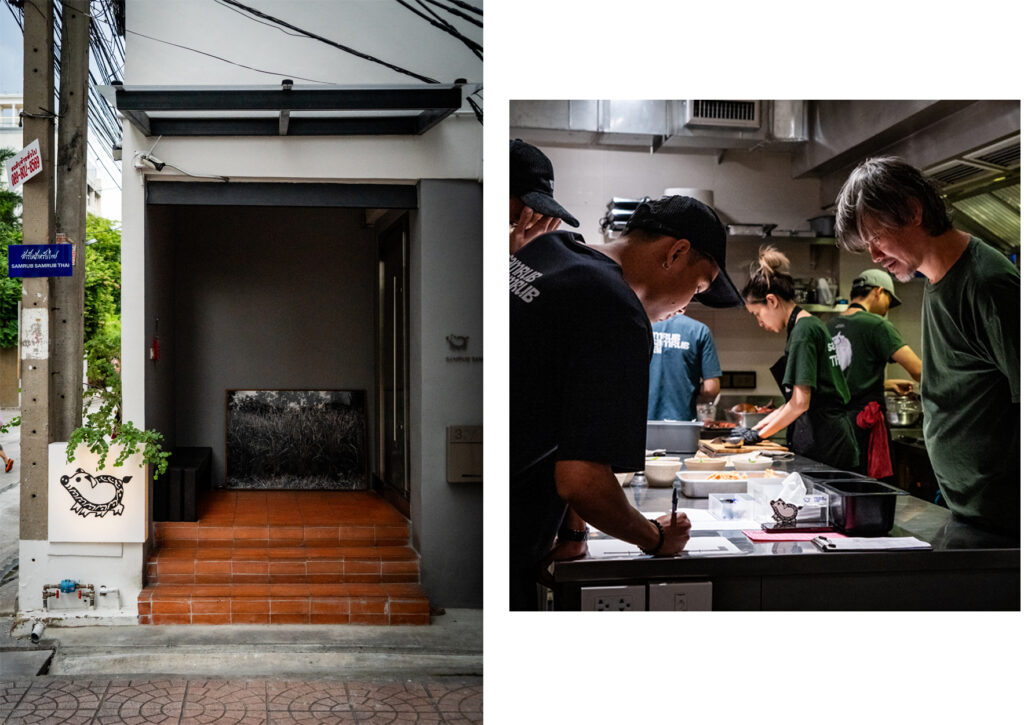
The first meal my grandma would make every day was for the monks. Her idea was: respect them so much that they feel the need to respect us more. That’s what I do with my team at the restaurant. Every day, I sit down with them and ask them questions. “Why do you work here?” and “Do you like me?” I changed the kitchen to be like my childhood home, there are no separated sections and no one orders anyone around.
When it was rice harvesting season, everyone helped. We call this Auo Moeh. (Note: ‘เอามื้อ’ — doing something with the help of each other.) Everyone ate the rice on the ground in a round circle together. My grandma made kub kao (food that’s eaten with rice). She would put it on a wooden cart with bicycle wheels and push it across the river. At noon, everyone would put down their mats, rice straws and banana leaves. Then grandma would place down the food and everyone would come together for a meal under the tree shades.
Long ago, the Northern region was made up of Lan Na and Lan Xang. These kingdoms were big, the food was diverse. There were Muslims and Burmese and Indians; Chinese influence from Yunnan. It’s not just khao soi, kaeng ho, kaeng thalae, laab – the knowledge was vast. Thai soups have oil on the surface to protect them from bacteria. It’s pretty clever to preserve food like this. Now you go to 7-Eleven, you can have everything.
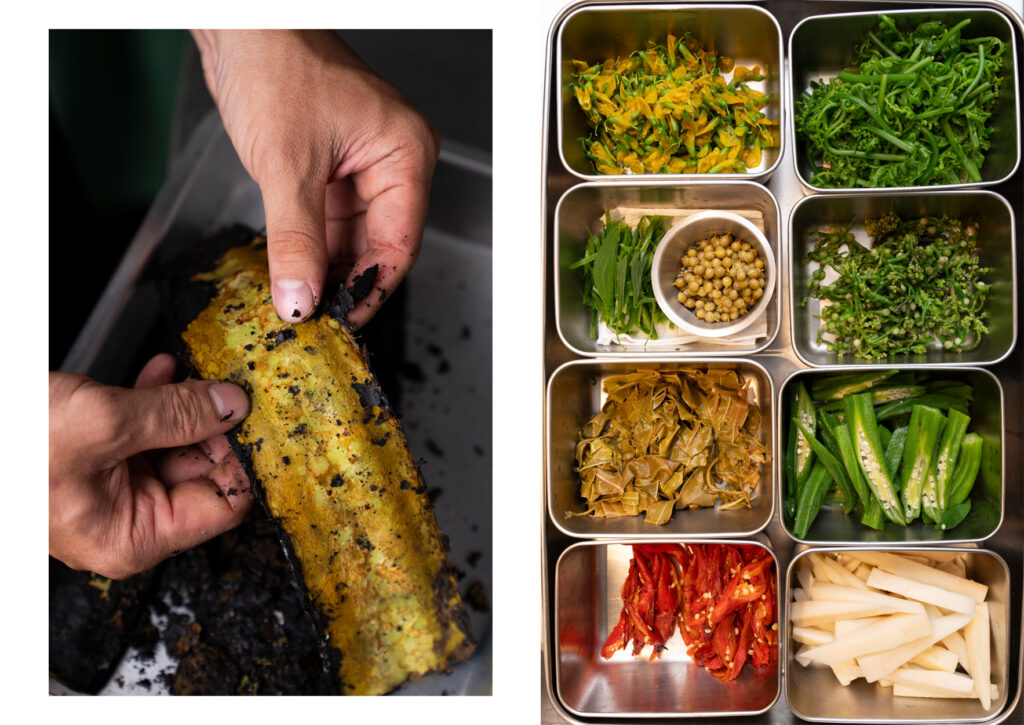
Vegetables and leaves grew around the rice paddies. Bai kom khor, a mountain basil leaf between lemon basil and Thai basil. Indian trumpet, or midnight coral: a strange thing that not many people eat anymore, its long pods are like edible beans. Makhwaen: it’s a prickly ash. You get that mala sensation like you do with Sichuan peppercorns. You can’t get these in Bangkok, my aunt delivers them from Lampang every week.
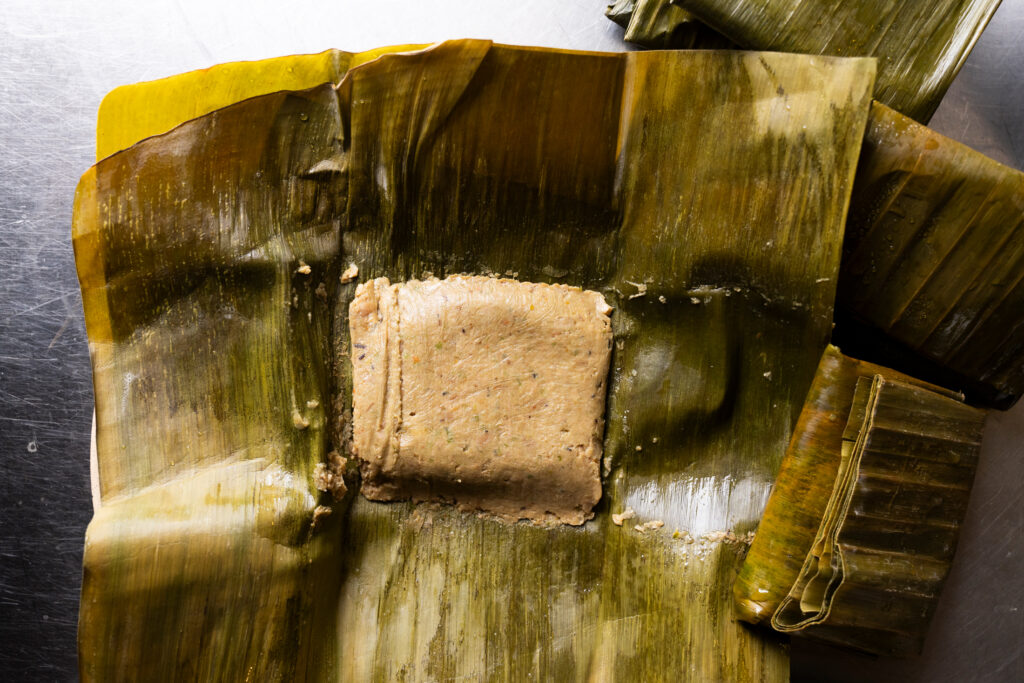
Another aunt of mine delivers toonao, it’s like Japanese natto. You steam soybeans and leave them to ferment like koji at room temperature. Then cook with chilli, garlic, shallot, coriander, and wrap in a banana leaf and steam again. Growing up, we would eat it with rat tail radish, which has these seeds inside with a warming, mustard-like flavour. Now, when I serve toonao at the restaurant I serve it in mustard leaves to reference that idea.
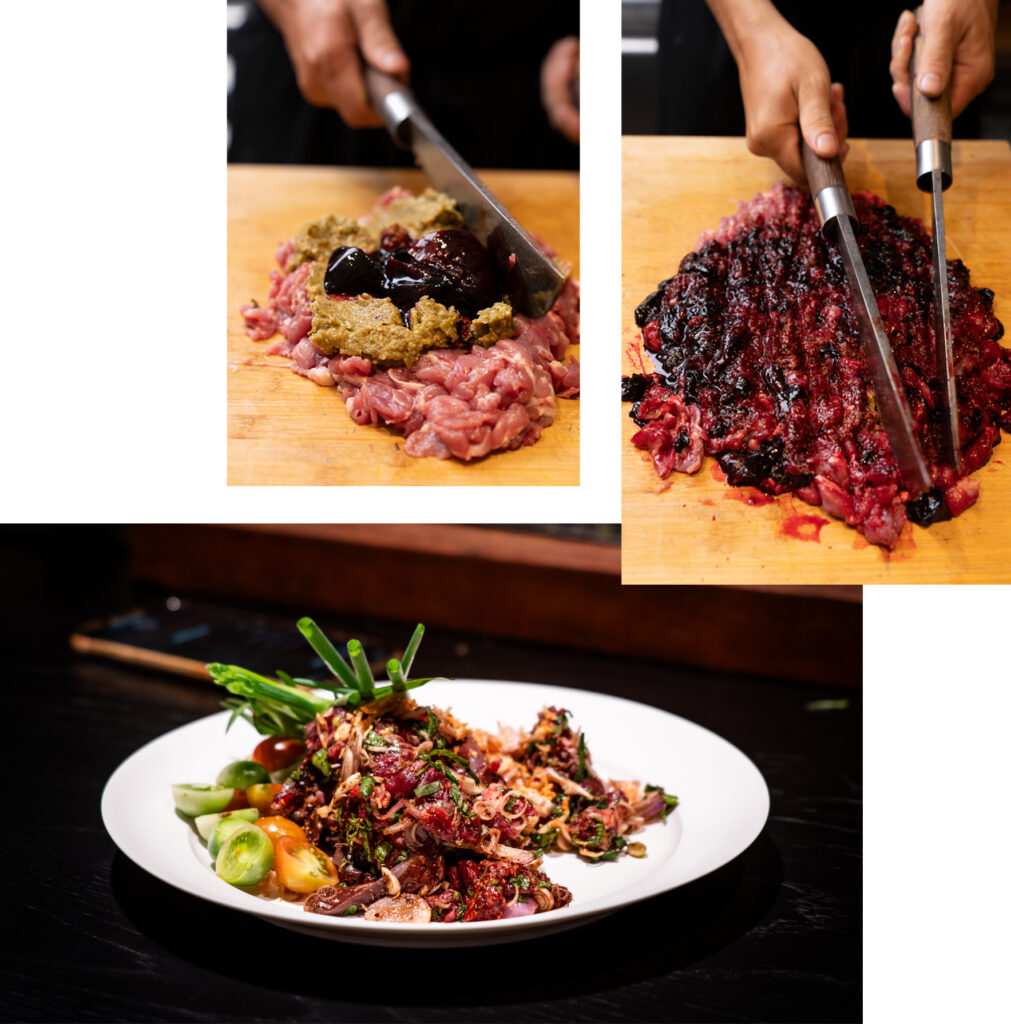
Laab comes from the Tai Lue people (note: an ethnic group in the North). They came from Yunnan originally, so the Northern style of laab is influenced by China. It is sacred because it involves killing a large animal. When I was growing up, no women were allowed to make laab. My grandma would have to call the boys in to do it. It was seen as having male characteristics, eaten raw to portray masculinity. I hate that idea now. Food can’t be separated like that, it’s for all of us.
The secret to Northern-style laab is prik laab – a spice mix of dried makhwaen, cumin seeds, coriander seeds, fennel seeds, black peppercorns, nutmeg, white cardamom, long pepper (a deeply spicy Thai pepper), star anise, fresh chilli, and chilli flakes. We rub that onto raw buffalo meat and dress with bile, pickled makhwaen, tomatoes pickled with fish sauce, and fresh herbs.
Moving to Chiang Mai aged 11 was strange for me. It’s a big city. Khao soi, the noodle curry, was the first thing I tried. I thought it was going to be hot but, no, it was rich and creamy from the coconut cream. My grandma didn’t use much coconut cream. When she did it was in desserts.
In Lampang, we spoke very fast; in Chiang Mai it’s much slower. The way they live, work, and eat is different. In Lampang, my grandma cooked spicy food. But in Chiang Mai it’s very mild. I think it’s because Chiang Mai was a royal territory, and King Rama V had a Lan Na wife there. There would be welcoming parties for officials coming from Bangkok and the cooks would adapt the dishes to suit their palates.
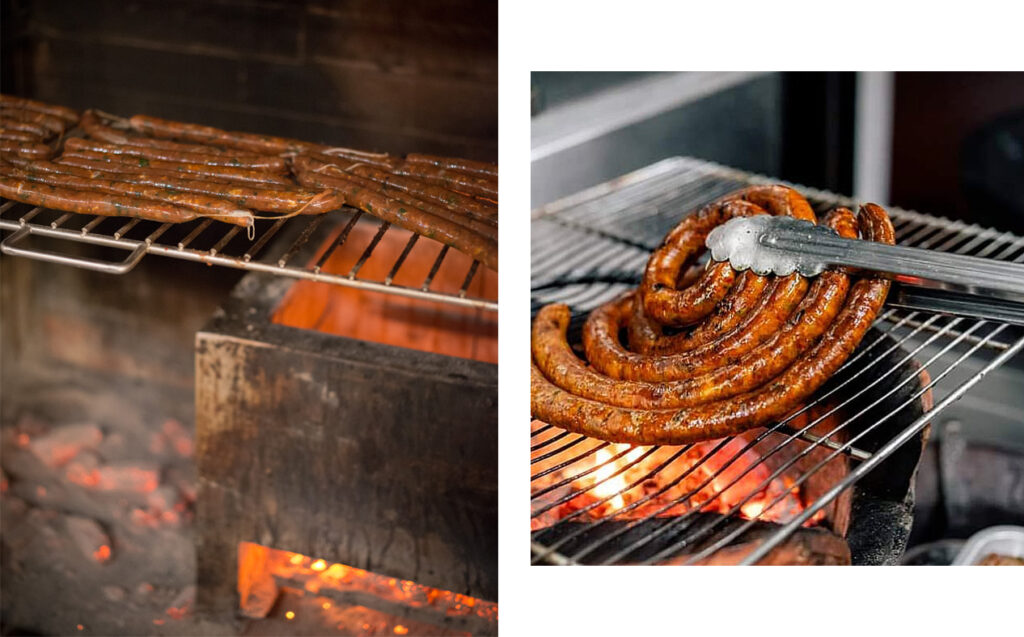
Nowadays, Northern food is not very popular because it takes time to cook. It is slow and sophisticated. Think about sai ua – a Northern Thai sausage of minced pork, shallots, garlic, pepper, lemongrass, turmeric, galangal, kaffir lime leaves, coriander, and spring onion; stuffed inside pig intestine and grilled over charcoal. It’s a very niche thing. And laab: in the Isan region it’s made quickly but in the North it’s a long process.
I love reading because my father used to make me read. I read all the time, novels and non-fiction; existentialists like Albert Camus and Jean-Paul Sartre. When I was studying at university, I read books by Rong Wongsawan. He was an author in the 60s, the era of hippies, and lived in San Francisco for five years. He wrote about the strangeness he found there. It became a lifestyle of mine, what I call “happiness-ism” – to live life with fun.
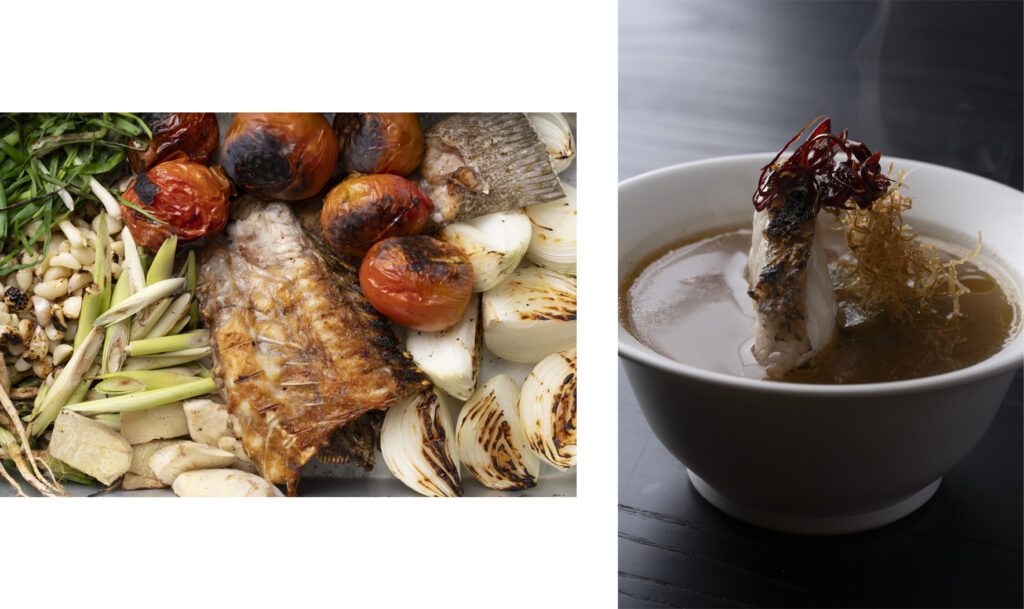
When I was at Nahm, the most life-changing moment was finding an old Thai cookbook. It made me realise that Thai food is unfathomably diverse. I recently found a cookbook from Lampang with a ginger curry soup in it called kaeng nam khing – made with ginger, tomato, pork, pork bones, and dried fish – that’s poured over rice noodles. I make it with red grouper. We dry the bones (to recreate the dried fish element) and grill the ginger (traditionally, it would just be cooked in the pot) to make a stock with tomato, spring onion, shallot, garlic, and onion. It’s really nice and very surprising.
I don’t know what religion I believe in. Maybe this place – Samrub Samrub Thai – is my religion. But sometimes, staying in Bangkok, I feel afraid because you can’t see the sky. On weekends I take my children and wife to the provinces, to nature, to the rice paddies, to the things I’ve experienced before. I take them to see the sky.
How do people know pad thai? Because it’s made again and again. 500 people a month come to my restaurant and I give about ten percent of them my recipes. I don’t care. I give my cooks recipes by email so they can’t lose them. I change the menu every month, that’s fifteen new dishes, and they have all of them. And they share knowledge with me. We talk about old food, ancient food, but really it’s about people. You need people to understand why you do something, that’s what keeps these foods alive.
By Prin Polsuk, as told to Matt Hunt & Isaac Parham.
Additional translation: Parin and Anya Hemtanon.