

Cairo
Cairo isn’t San Sebastian.
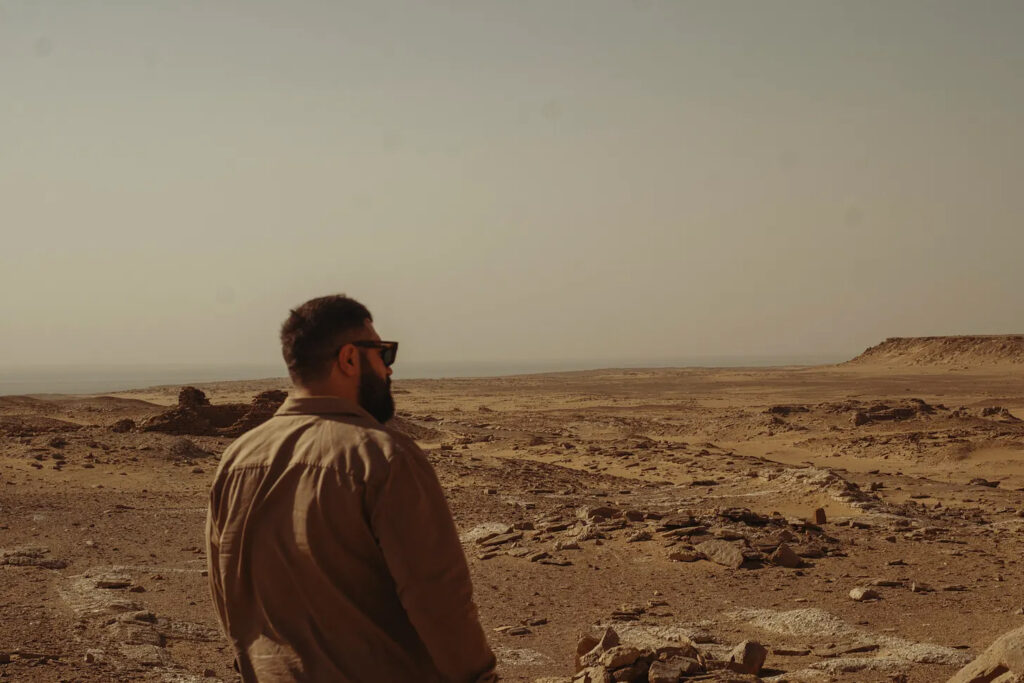
Its food culture unravels in doorways and narrow spaces. There are a lot of people trying to survive, basically, and that brings an ingenuity that shapes the food and architecture. People warned me about the intensity of Bangkok before I went. But having grown up going to Cairo, that seemed pretty chilled.
These research trips are really important. You’re switched on; your senses are heightened. Ideas can strike at any moment. It could just be me walking through the desert and really wanting a lemonade. You’re like, alright, that needs to go on the menu.
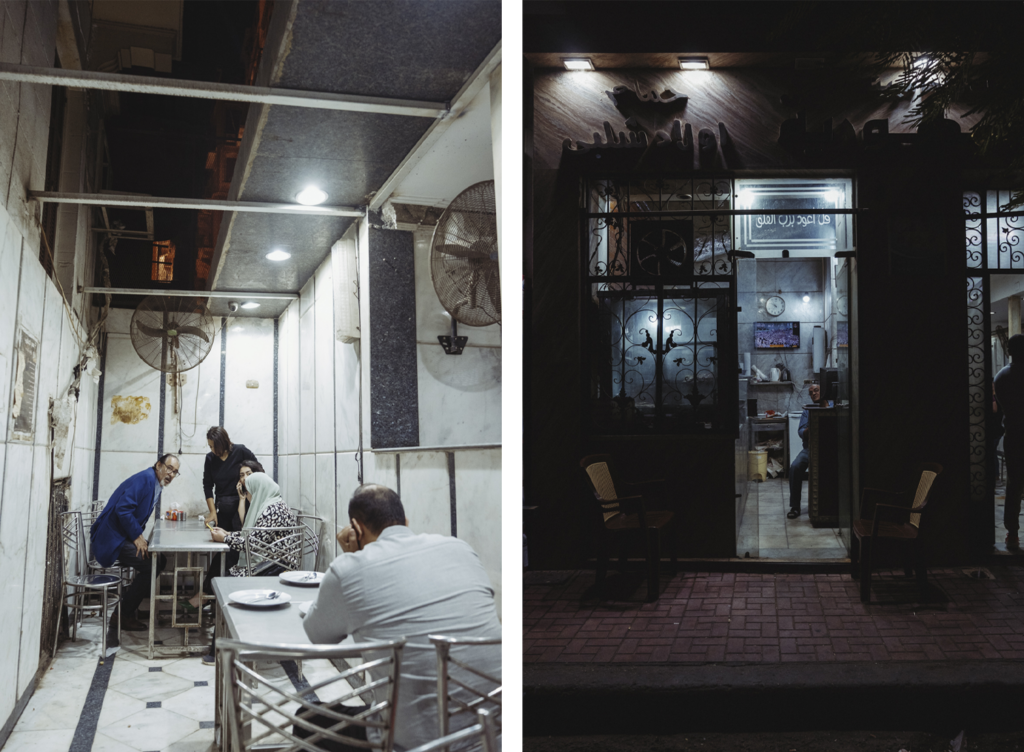
Our first stop off: El Gomhoureya. A tiny shop with a giant grill. The seating area exists between two buildings and is clad in white marble with a few stainless steel chairs.
They only do four or five items here, all sold by weight. Our order: half a kilo of kofta, lamb chops, two pigeons which have been stuffed with spiced rice, then braised and grilled, and shoulder of lamb, which has also been braised and comes with its connective tissue still intact. The grilled meats arrive with bread, salad, and a spice mix of chilli and cumin.
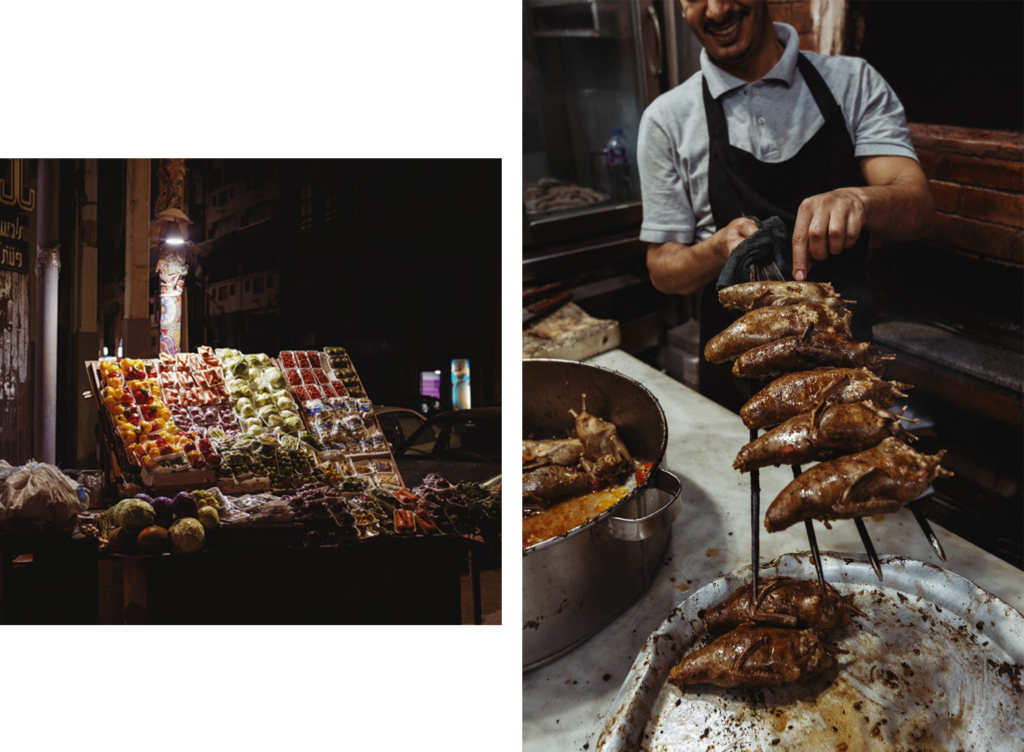
I wanted to come here with my team to reset their minds about what it is to grill meat over charcoal. Because it’s very different to what you get with the American smokehouse style or the low and slow method of Thai barbecue. Here, you taste the charcoal because of how close they cook to the coals. But the meat is never singed – they constantly move it around so that the fat drips down, the smoke comes up, and you get this deep smoky flavour. It’s masterful.
I want to pull that technique into dishes where you wouldn’t expect it. Because the meat isn’t heavily grilled. It doesn’t have any blackening. It could have been roasted and it’s only through tasting it that you really understand that it’s been over fire. So you could have something that looks like roast chicken but has this incredible layer of smokiness.
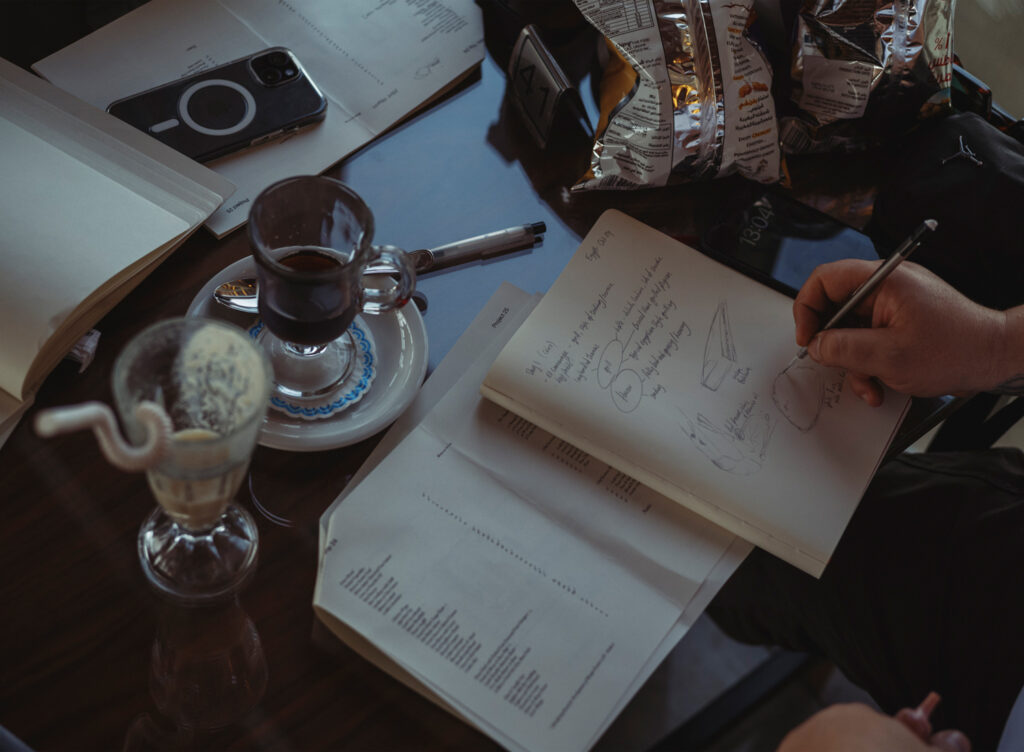
It’s never about plagiarising someone’s food. You want to pay homage to the experience or something that you picked up in the dish. With the koftas, for instance, you take note of the tiny details: that they are seasoned while they cook, but because they are so small and thin the seasoning penetrates enough.
You note the texture of the mince, what grade he minced the meat on, and that they’ve got a super high fat-to-meat ratio. You go home and try to recreate it and that’s where the real thinking comes in. I’m always careful to find the right way of translating something. You’re trying to be respectful of that original idea.
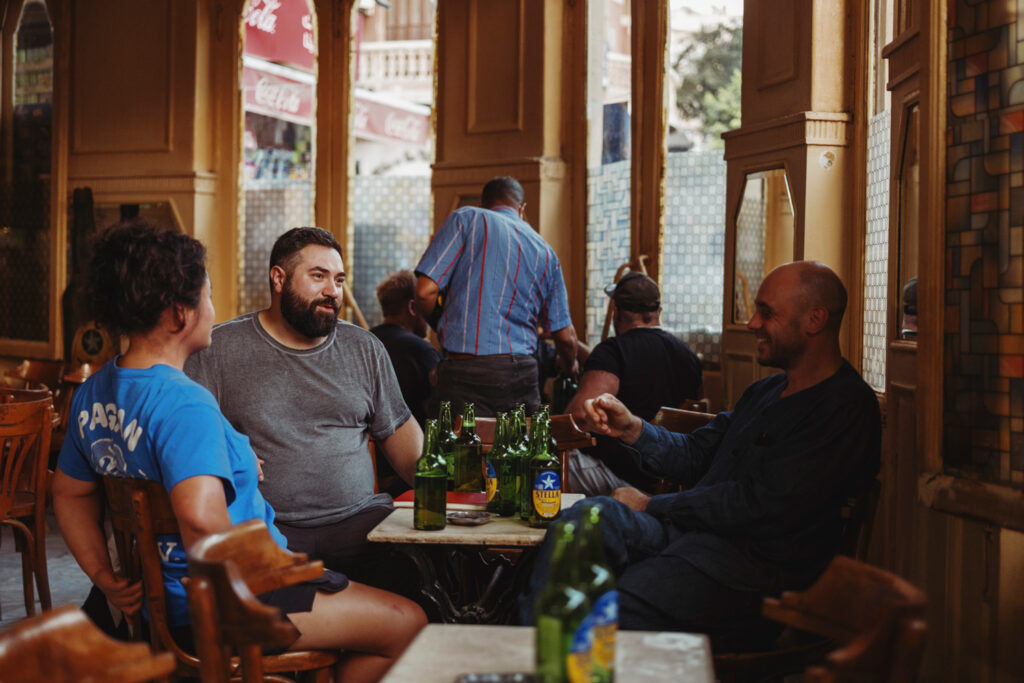
El Horreya is a really famous bar. All they serve is Stella, an Egyptian beer. There’s something about the feeling of the room: the high ceilings, mirrored pillars, and the bow-back chairs all over the place. Lots of incredible writers, philosophers, and revolutionaries have met at El Horreya. The name translates as Freedom Cafe and you can feel that energy. We use it as a base to think freely and discuss ideas.
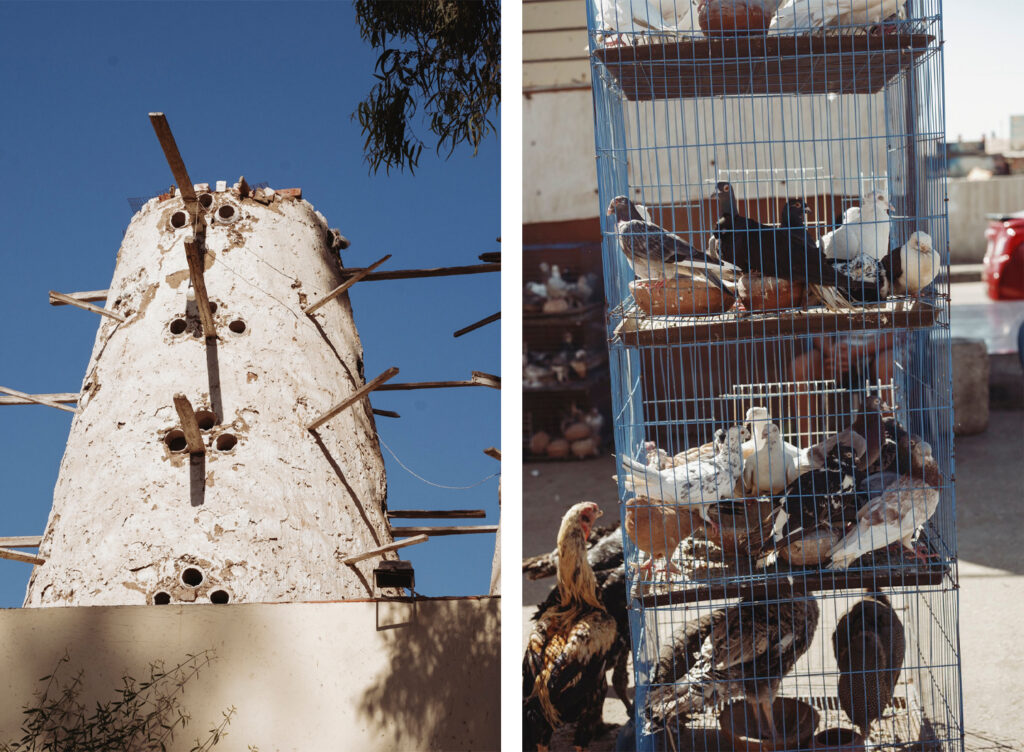
Stuffed pigeon, or hamam mahshi, is everywhere. The pigeon is stuffed with rice – a really spiced, peppery rice – braised and then either fried in butter or grilled. People keep pigeons on their rooftops in Cairo, and in these incredible towers made out of straw and mud.
The French were in Egypt and the British were there for a long time – the Ottomans, too. They’ve all left their mark on the landscape of Cairo. Huge Ottoman castles, Soviet-like concrete structures, and baroque architecture sit side by side. Brutalism against Parisian flair. It’s super weird.
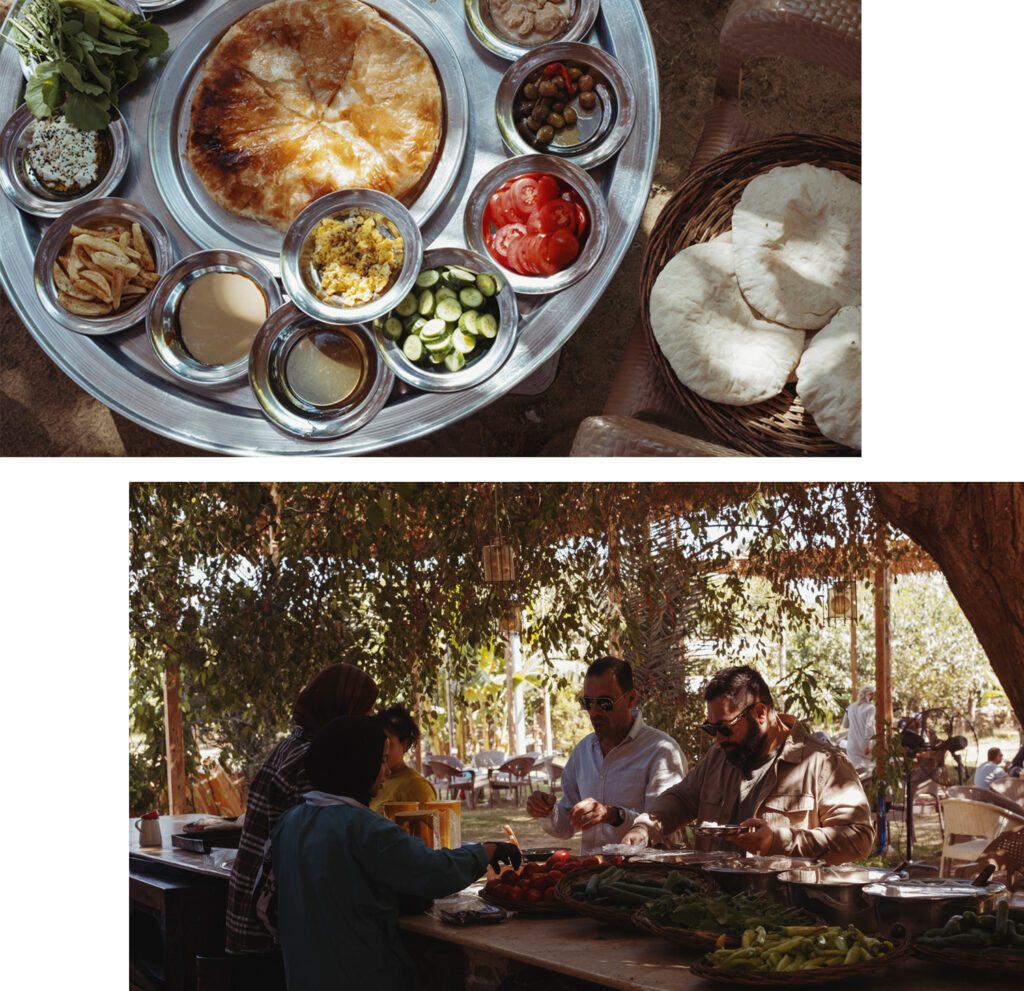
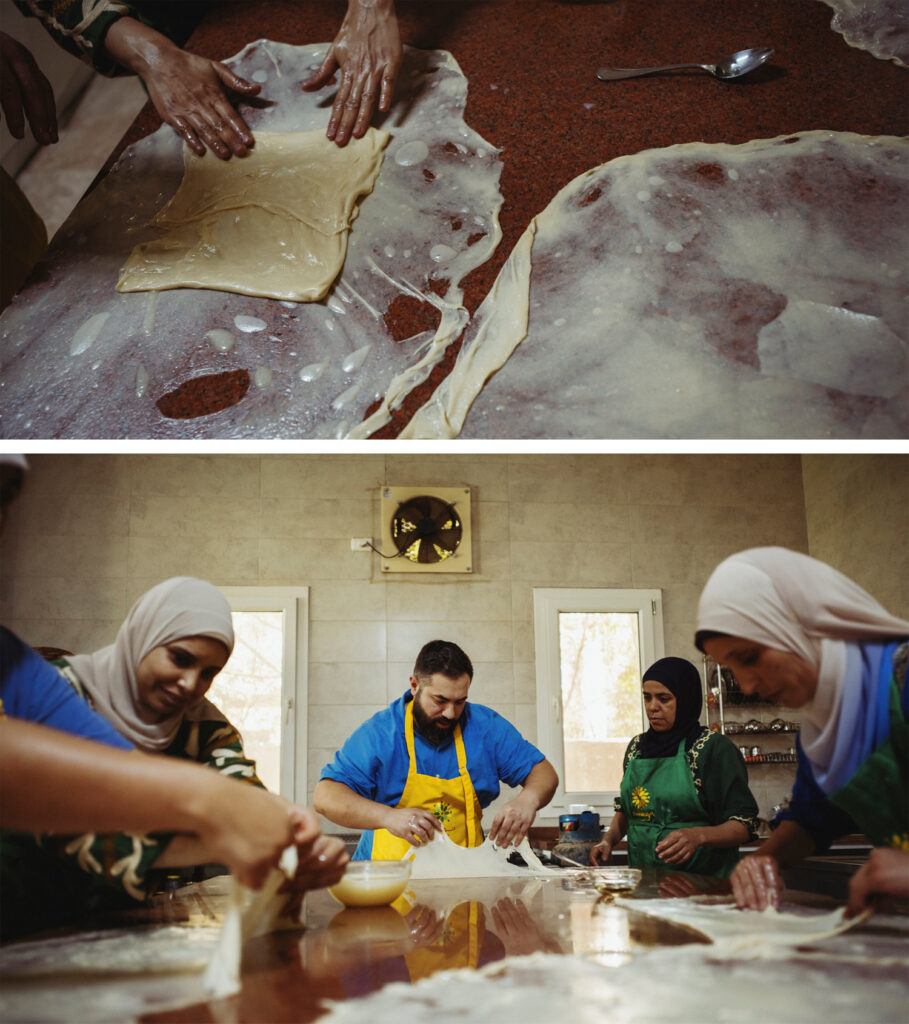
Nawaya Farm: an organic farm on the outskirts of Cairo. I am shocked by how much biodiversity there is – peanuts, citrus, and date trees all within two square metres. We spend time with a community of local women trying to protect recipes and cooking methods that are dying out. It’s nice to see, because it never really seemed a priority when I was a kid. Back then in Egypt, it was all about moving forward – not looking back.
Feteer meshaltet is a laminated bread that goes way back. You laminate it with buffalo butter – almost like a roti or puff pastry – and stretch it glass-thin. Then you rest and bake it. It’s one of the earliest laminated doughs and has that croissant-like texture. It’s really luxurious and you don’t wanna eat a lot of it. You can have it savoury or sweet, alongside aged cheese and honey. Incredible.
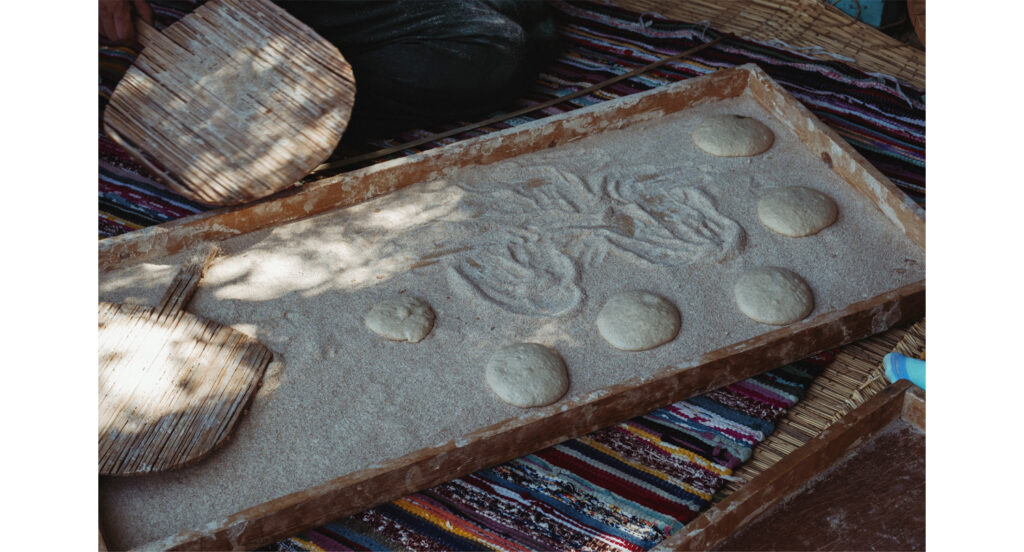
Aish baladi is a staple. Aish means life and baladi means city, so life of the city basically. Every citizen with an ID card is entitled to a certain amount of this bread – it’s like a less overt form of welfare.
It’s made with a really wet dough, almost 50/50 ratio of flour to water, and then shaped and left to rest in wheat bran. That wheat bran is put on a paddle, and then you shape the dough by tossing it and turning the paddle in the air. It looks way easier than it actually is.
Back in Cairo, we go to a street stall so famous it’s got its own Google Maps listing. I have numerous fights to try and get my sandwiches, but it’s worth it. It’s just liver (or an almost merguez-style thin sausage) fried with onions and peppers and packed into fino bread – a sort of soft brioche that I imagine has been left behind by the French – with a load of chillies and pickles.
I’m definitely looking at those flavours but it’s hard to get street food into a restaurant setting. You need to do it in a way that makes sense.
Ismailia
Ismailia, close to the Sinai Desert, is where my father’s from. I used to come here a lot as a kid but hadn’t been back in years – not until a few months before this trip.
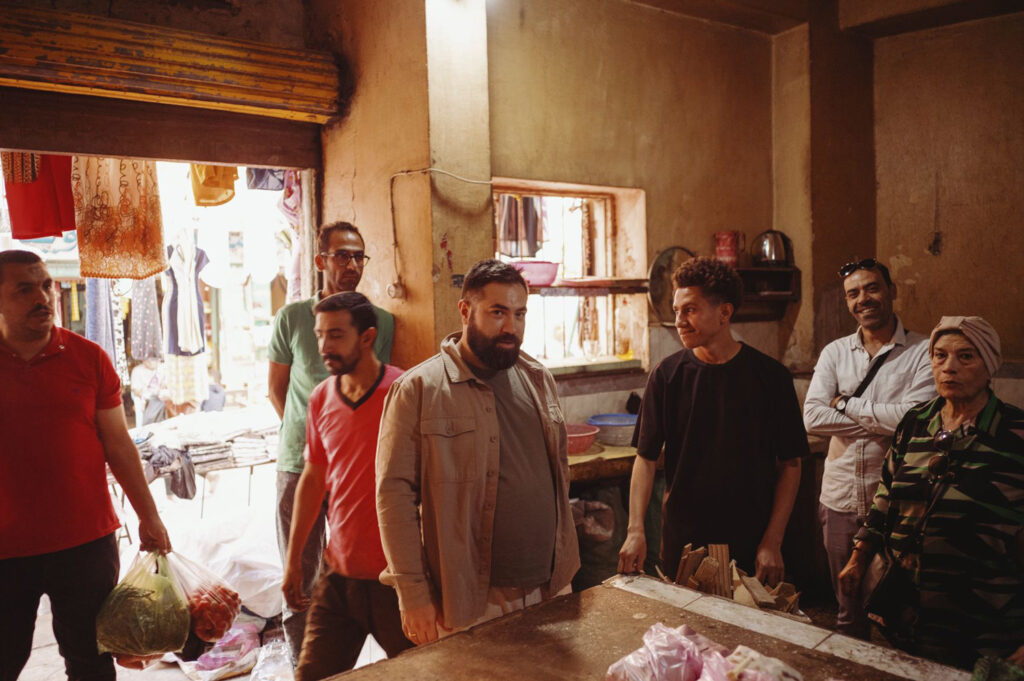
We’re here for Friday market and it’s absolutely packed with people coming and going. They’re like, what are these Westerners doing here? Can you move out of the way?
One of the things I remember fondly from my earliest trips to Egypt is the community ovens. Every culture has this kind of thing – or did. It’s a giant oven in the centre of town where people bring stuff to be cooked. Whoever’s running the oven weighs the ingredients and charges by weight.
Community ovens seem to be dying out across North Africa and definitely in Egypt, but my town still has a few of them. The one we visit is about seventy years old. Some people bring random stuff like lasagne but generally it’s used for fish.
The guy asks how you want it seasoned and there are very few options here – it’s olive oil and lemon or the same wheat bran used to make aish baladi. I think this is actually how they came about – they were bread ovens in the morning and later on would service the market for different things. Because once you’ve finished baking bread and still have a hot oven, what do you do?
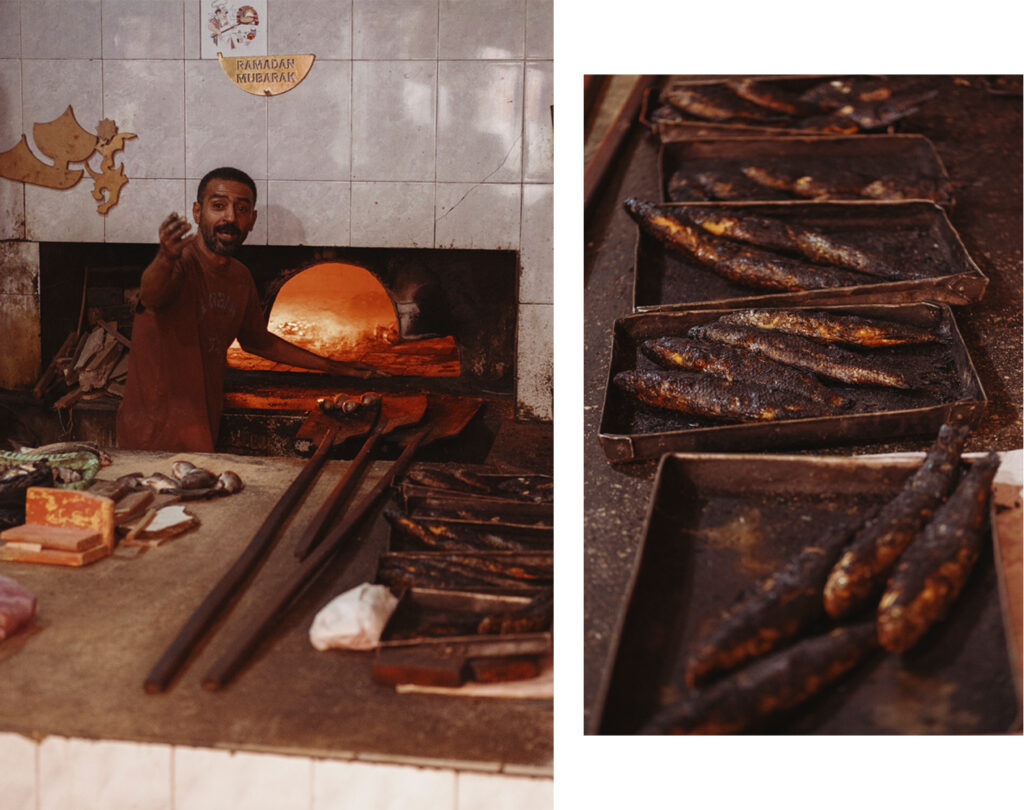
Our fish is coated in wheat bran and then thrown in the wood-fired oven until it blackens on the outside. Then it’s taken out, spices and salt are added, and it’s wrapped up ready to take away.
We take ours back to my aunt’s home and she serves the fish with rice and a simple salad. It’s easily one of the best meals of the trip. The fish has been confited from the steam inside the paper and the biscuity aroma from the bran plays nicely against the salinity of the fish.
It’s nerve-wracking bringing guests to meet my family. I’m a private person and haven’t seen them much myself over the last few years. But I’m glad I did it because it’s honest and true to my approach.
Naturally, you’re always trying to place yourself in this industry – am I more like this chef or that one? I’m surrounded by people that are smarter and more technical than me, which I’m grateful for. What I try to bring to my cooking is a sense of soulfulness. It’s got to be delicious and feel right.
Port Said
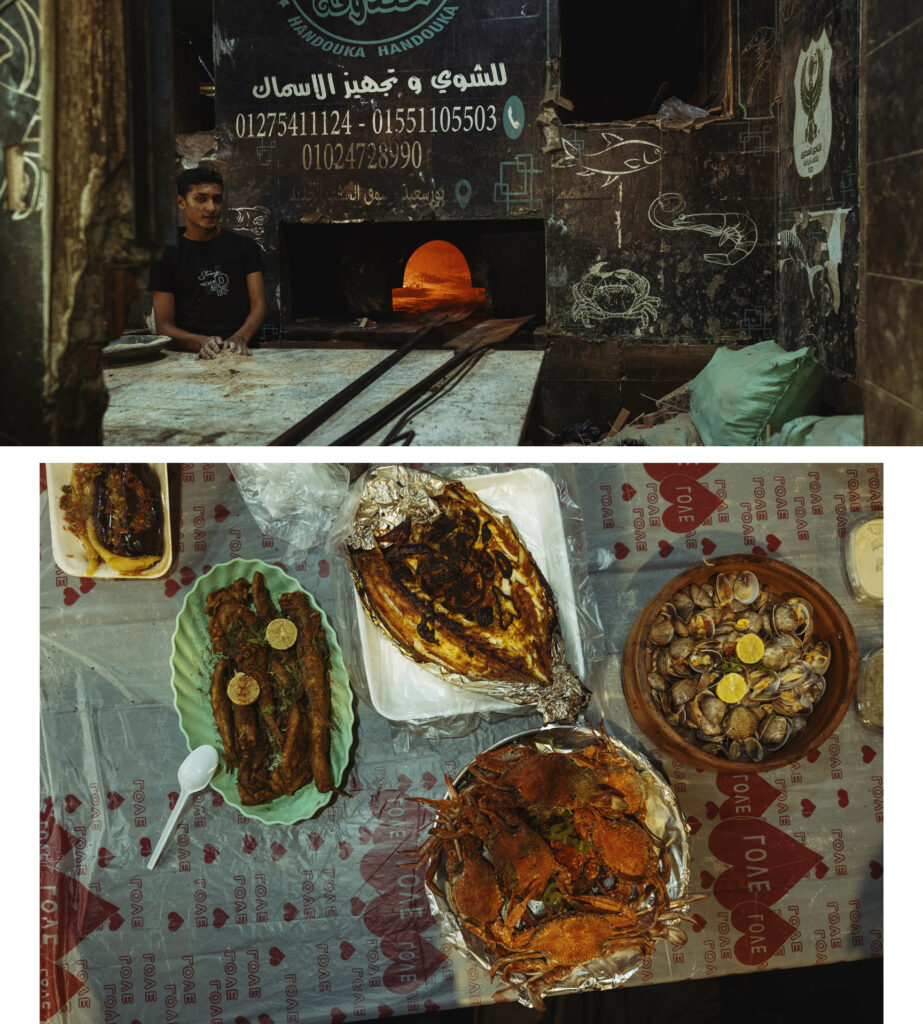
Our experience in Ismailia changes our itinerary: we want more of that. On the last day, we travel north to the city of Port Said on the Mediterranean where we find a fish market with five community ovens on one side, five on the other.
They’re like little restaurants.
You go to the fish stalls, choose the things you want cooked, and one of the guys from the stall takes you over to his mate’s oven that he’s got an arrangement with. The perfect hustle. We get prawns, fish – one grilled, one in the bran – and crabs.
My mind drifts back to London. Everything about the new restaurant will change after this trip. Not just the food but the layout, vibe, and aesthetic. You can’t be precious.
At the start of the process, it’s really easy to get hung up on what you have in your head and what you want to cook. But as the research continues, it becomes less about you and more about the guest. It’s a painful process, but a necessary one.
Because a restaurant is something you create for other people. Even if you’re cooking from your culture, it’s still for other people. I like that the process gives you enough detachment to realise it’s something you have to give away.
By Meedu Saad, as told to Isaac Parham.
Photography by Benjamin McMahon & Meedu Saad.