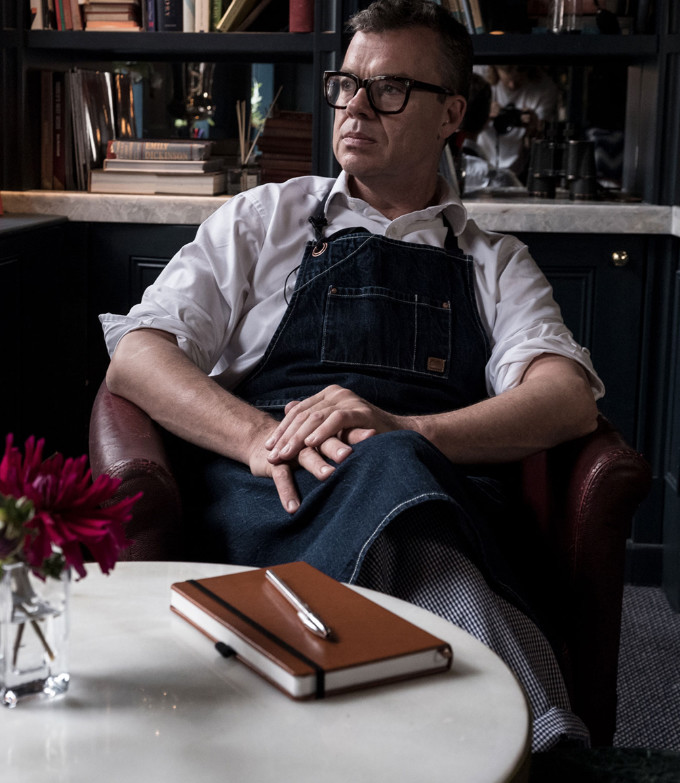


Bethlehem means House of Bread in Aramaic: its bread culture runs deep. Chef Fadi Kattan, who grew up in Bethlehem, takes us inside this tradition, revealing the breads and bakeries that serve the city and its people in more ways than you might think.
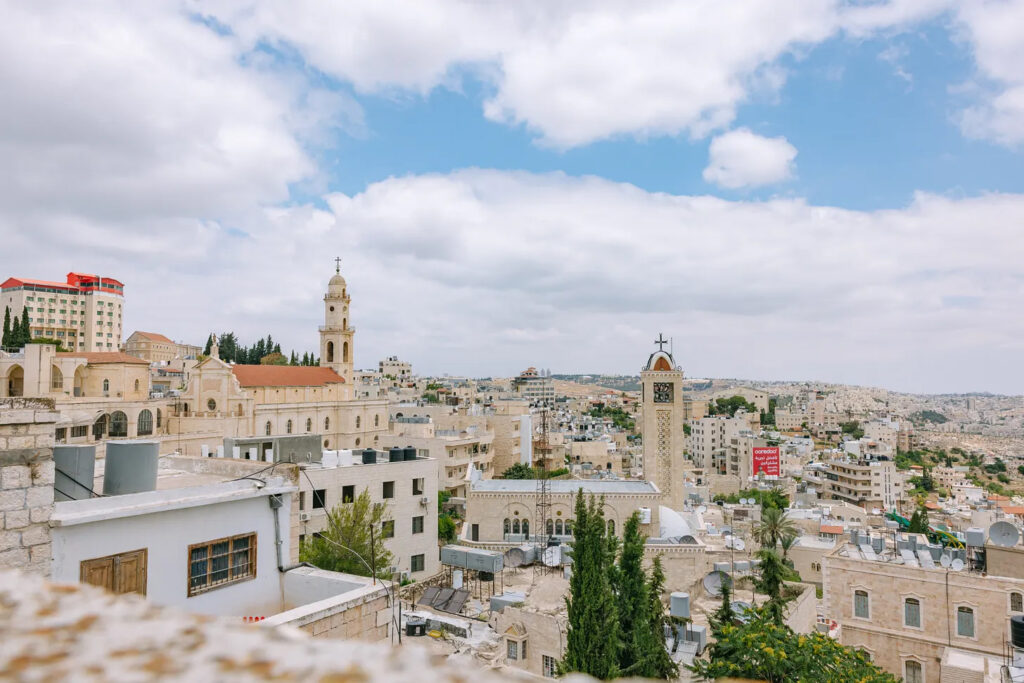
Palestinians, we’re very picky about our bread.
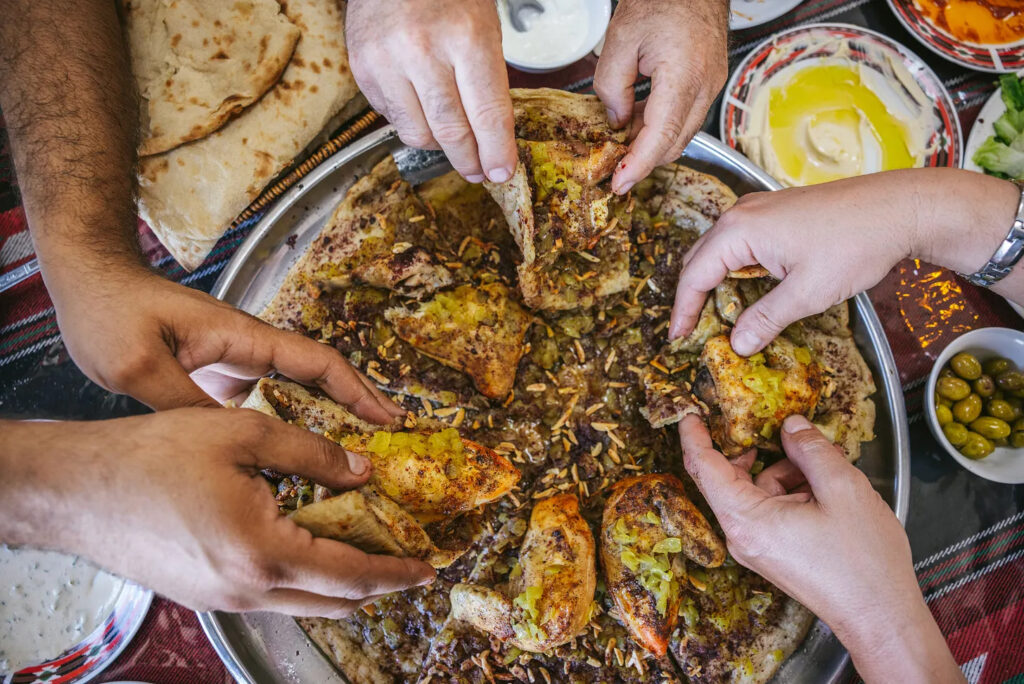
In our culture, it’s beyond something that you have on the side. Bread is a utensil; a base to our national dish of musakhan and intrinsic to the way we eat. Historically, wheat has always been grown in Palestine – it still is to a lesser extent – and freekeh, a by-product of wheat, remains a staple.
Four traditional breads reveal this obsession. We have taboon, a yeasted flatbread cooked on hot pebbles from the Dead Sea; shrak, thinner, unleavened, and cooked on a dome grill; kmaj, our version of pitta; and ka’ek, ring-shaped and topped with sesame seeds.
In my home city of Bethlehem – which, in Aramaic, literally means House of Bread – there are specialists for each variety. Family-run bakehouses that uphold the traditions of Palestinian bread-making and serve the people of the city in more ways than one.
Let me take you inside.
Abu Fuad’s Bakery
Catholic Action Roundabout
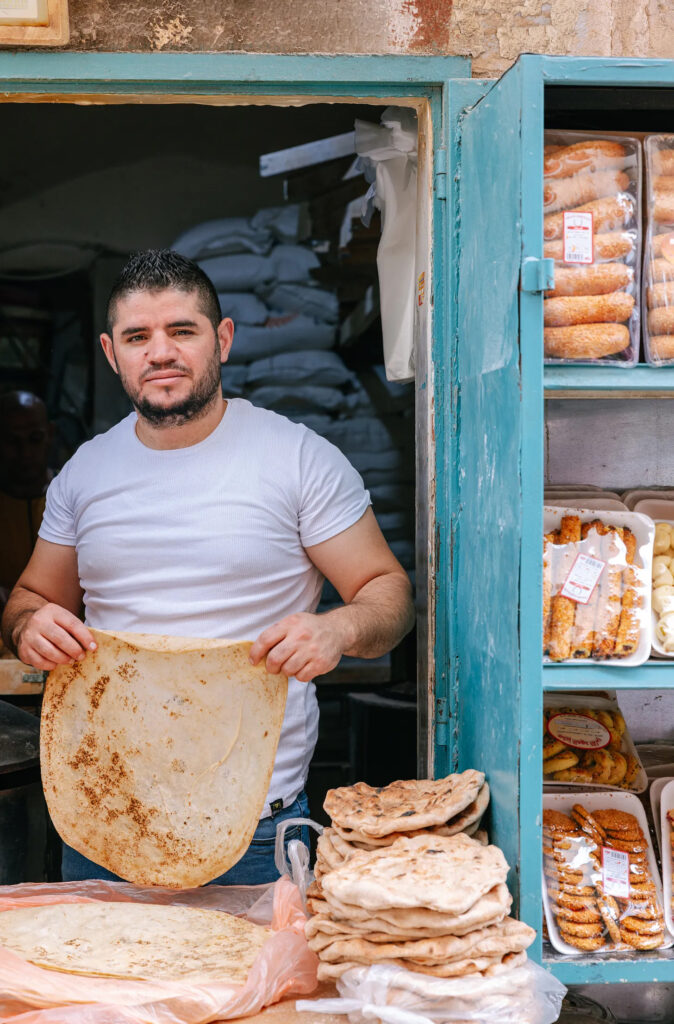
Ka’ek often gets mistaken for a bagel but it has nothing to do with it. Bagels are boiled and then cooked in an oven whereas ka’ek is cooked solely in a wood oven. It’s a pretty wet dough and for that reason can be difficult to shape, but once it rises you will have that perfect oval shape.
The mistake people make is to put humidity in the oven – it doesn’t need it. And you shouldn’t cover ka’ek either. The texture you are looking for is when the outside is very crispy and the inside is nice and aerated. When you cover it you’re forcing humidity back in and losing that aeration. It’s like a baguette in that sense – cover it and it falls back.
I always associate ka’ek with Sundays, when as a child we’d have long leisurely breakfasts and ka’ek and eggs would come in from the same bakery I get it today. You’ll find it on the roundabout at the entrance of Star Street, which is a World Heritage Site, run by a family that’s been there for three generations. The people I knew once as young kids are now the ones more or less running it with their father. It has a strong sense of community.
It doesn’t look much inside because the surfaces are covered in wood shavings – they bake the eggs and cover them in the shavings to keep them warm and finish cooking – but it’s a magical place.
You have this wonderful moment in the morning when the cart sellers gather to pick up the bread, which they’ll sell across the city with loud calls of “ka’ek” throughout the day. Again, I have known these guys since they were kids: I have seen them grow older and their beards turn white.
Shweiki Bakery
Al-Fawaghreh Street
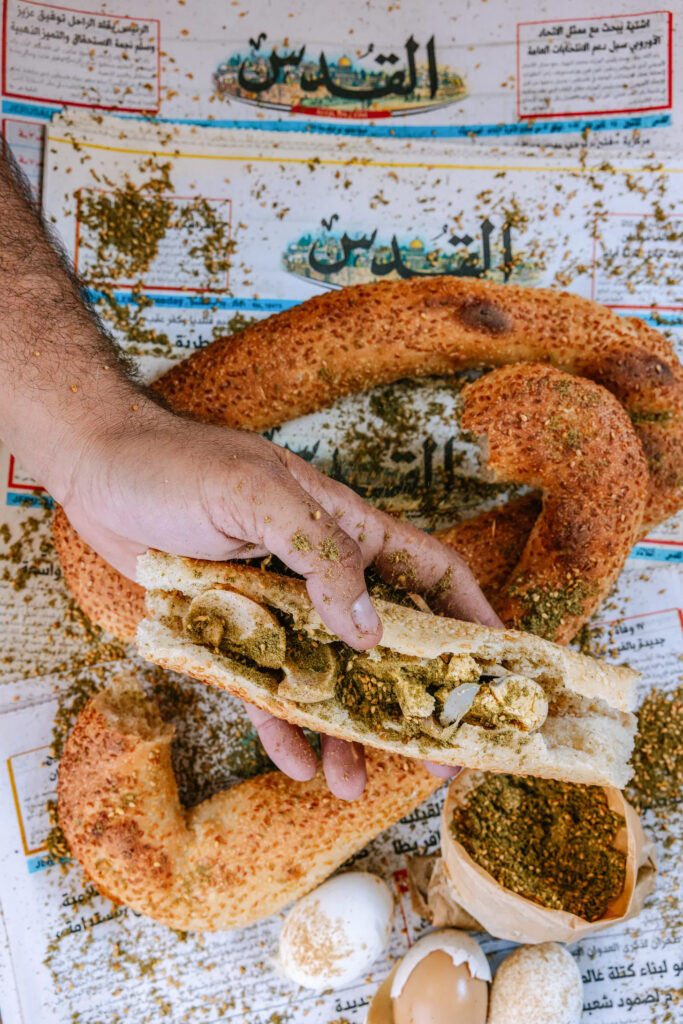
The Shweiki bakery in the old city belongs to a family that has run it for four generations. Going there brings up lots of memories from childhood; the smell of warm bread fresh out of the oven. All you see from the outside is a window with a metallic table stacked with shrak and taboon. That’s where they give out free bread.
It’s done so gently, so respectfully. People come up to the window, ask for the bread they want and simply don’t pay. Because Bethlehem is a small town, the owners know who has the means and who doesn’t. Those that need it aren’t asking for free bread, they’re just asking for bread.
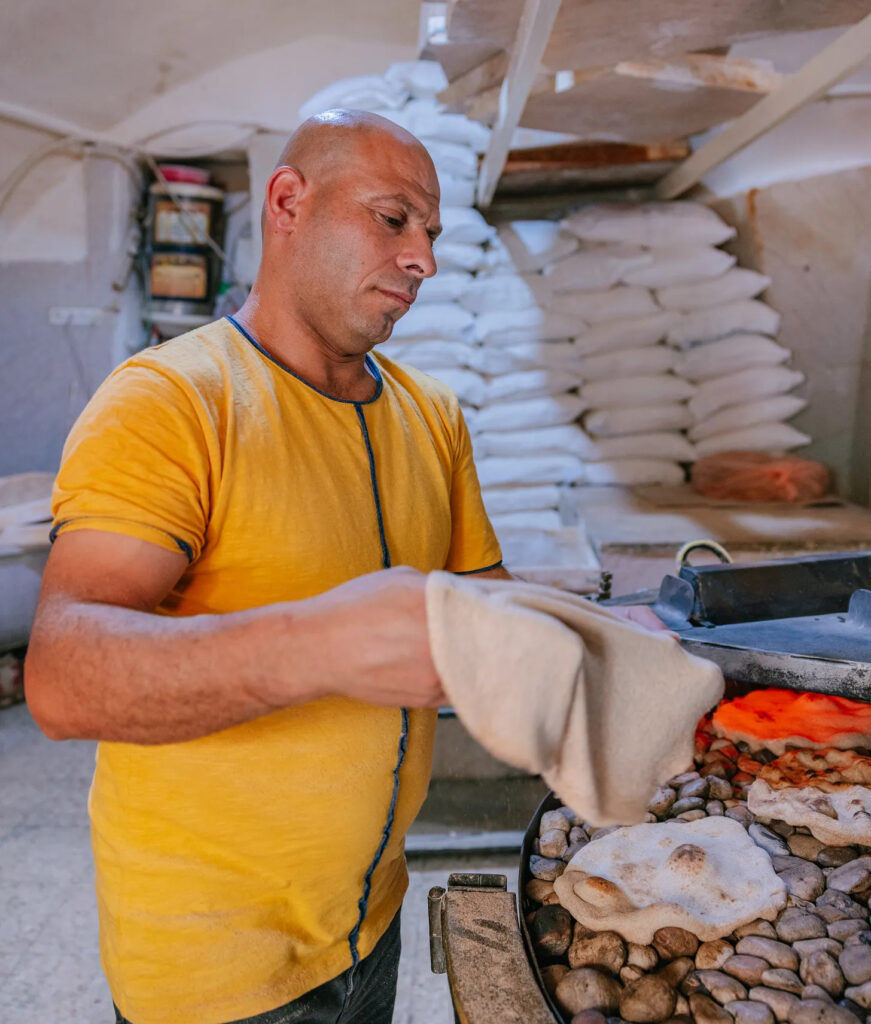
The breads themselves are made the traditional way. Inside, you see the circular, rotating pebble oven for the taboon. These ovens used to be more common in homes – with taboon an essential part of musakhan, in which the flatbread is soaked in olive oil and covered with onions, sumac, and roasted chicken – but for the most part they’ve disappeared.
The taboon dough is quite dry. Because it uses whole wheat it doesn’t actually stretch very well, so you need to measure it very carefully. The trick is to lay the dough on those pebbles when they’re exactly 200°C. If you miss the mark, you’ll get a very doughy taboon.
Another mistake people make is with the cooking time. Because taboon should be around 1cm thick, people imagine it needs a lot of baking time. But you’re not really baking it. The heat from the pebbles makes it crispy and the oven cooks it in the middle. You just need to flip it over so both sides get that residual heat.
Shrak is what we use for sandwiches. We stuff it with labneh, butter, and olive oil and roll it. It’s fast-food bread. I’ve never really made it myself because you need to cook it on a saj – which is an iron dome griddle heated by gas; almost like how Indians cook naan in a tandoor. Also, I’m not really good at making crepes – I’m just imagining that very thin dough, I’d massacre it!
Shweiki Bakery
Manger Street
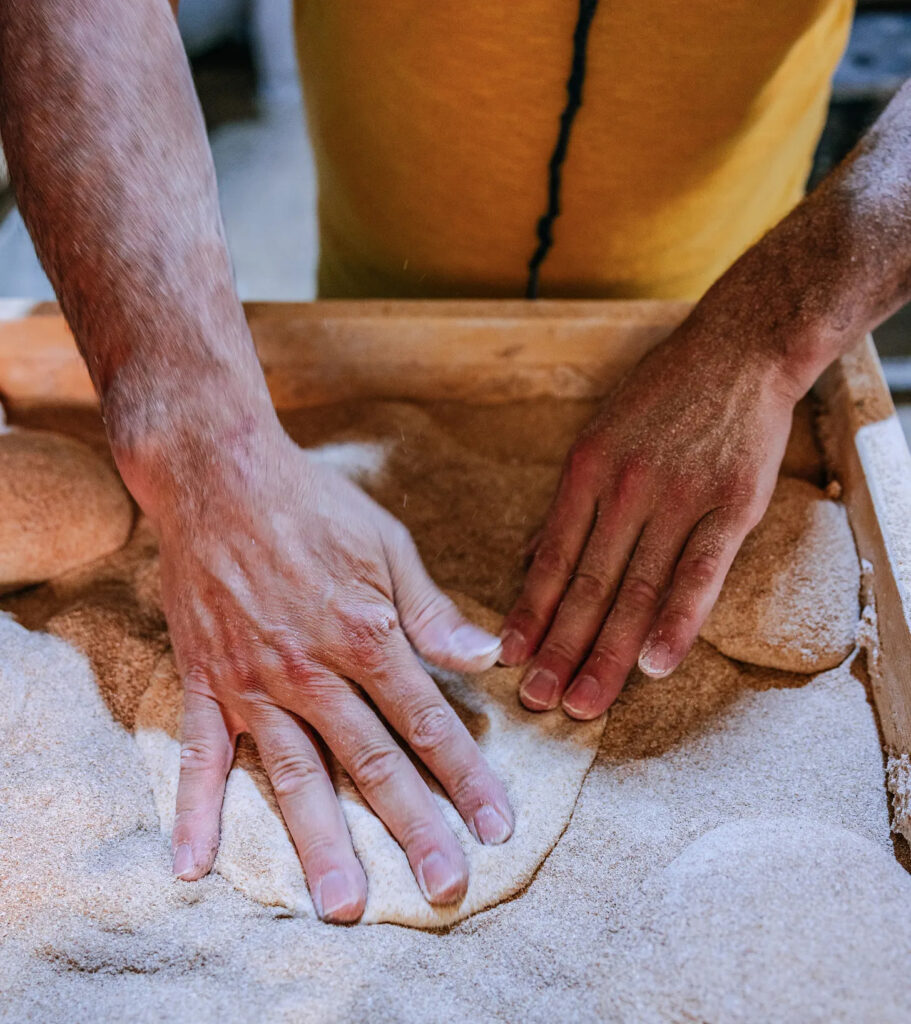
The other Shweiki bakery is on the main street and where I go for kmaj, though they also do shrak. You pull up and there’s one guy who’s picking up the warm pitta. (If you think you’re smart you’re going to do the same thing as him and burn your fingers!)
He packs them into plastic bags and everyone knows to turn up when they can still get them fresh out of the bag. You get your warm bread and eat it in the car on the way home. Nothing beats it.
Kmaj is pocket bread. I hate the appellation of pocket bread but that’s what it is. You fill it with falafel or use it to make a shawarma sandwich. It’s a straightforward bread dough and unlike the others it doesn’t have to be whole wheat. I started making it in lockdown and soon realised how much I had taken the bakery for granted!
Same with houmous – I had actually never made houmous until then. Being in a small town like Bethlehem, it’s all very accessible and you want to get it from the people who do it best.
What creates the pocket in the bread is the heat of the surface you put it on, because it lets the dough rise and detach. The trick is to heat the baking tray to 220°C and then lay your dough on it, you’ll see it fluff up.
People panic because it fluffs up and then goes back down, they think the dough is sticking but it isn’t. It’s actually the gases that are emanating from your risen dough that puff it up, then they seep out slowly. You will still get that pocket. Once out of the oven, kmaj needs to be covered in cloth like taboon.
What’s interesting about kmaj and all the breads is that they haven’t changed much. We’re still very close to the traditions and they still have that strong link to the land, to the seasons.
By Fadi Kattan, as told to Isaac Parham.
Photography courtesy of Fadi Kattan, reproduced from his book Bethlehem: A Celebration of Palestinian Food.